For most of us, scrap metal is the last option. The rusty gate is no longer free to swing, the broken clothesline frame leans against the fence, and the bent brackets behind the shed sit there from the last major clean-up. All of it looks used up and ready to be forgotten. To the metal, none of this is true. Scrap steel isn’t finished. It’s in the middle of a really long life.
In this blog, I’ll take you on a journey with one imagined piece of steel, an old garden gate frame, from a suburban backyard all the way to a brand new structural beam. The story is illustrative, but it accurately represents the process of steel recycling. It also shows why it’s better to take your scrap to a yard like H&Z Scrap Metal than to leave a stack of rust in the driveway.
Chapter One: Retired in the Backyard
For eleven years, I hung on two big hinges at the side of a family house, keeping the dog inside and the neighborhood out. I was painted green once, but most of the green has flaked away, and now I’m just steel. Rainfall, the summer sun, and a few too many kicked footballs did the rest. The latch failed to catch. One hinge bent. Then one day they replaced me with a clever timber gate and leaned me against the back fence, where I spent two winters slowly coloring myself orange.
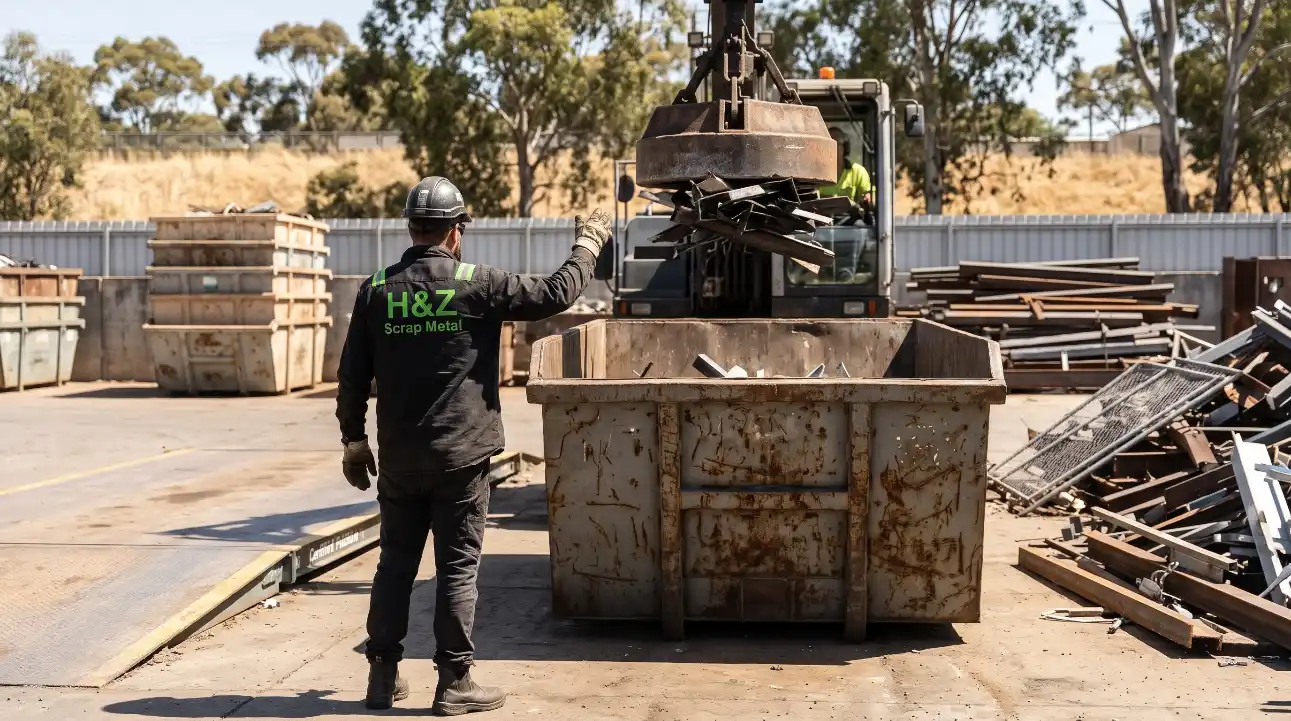
I wasn’t forgotten, though. One Saturday, the homeowner decided the backyard had to be cleared before he could have a barbecue there over the weekend. A rusty wheelbarrow tray, an old bundle of fencing wire, a broken clothesline, and a pair of steel brackets from a shed that had fallen years before were with me. Next came what all old pieces of metal dream of hearing: “That’s all scrap, let’s take it to the yard.”
That’s the beginning of my second life. Of course, the homeowner could have thrown me in some trash receptacle. If that had been the case, I would have been buried in landfill, my steel locked up, and no one would ever be able to use it. Rather, I was put up on the back of a ute, and the trip started.
Chapter Two: The Magnet Test Before the Drive
Just before our departure, the homeowner did something clever. He picked up a fridge magnet and walked it over each one of the stack. It stuck firmly to me, the wheelbarrow tray, the brackets, and the clothesline frame. One shiny bracket, however, let the magnet drop. That simple test let him determine which pieces were steel (a ferrous metal) and which were non-ferrous metals like aluminum, copper, or brass. A small note here, though: some stainless steel is non-magnetic, so a magnet is a good first step, but not a final answer.
He placed the shiny bracket in a box by itself. The price of non-ferrous metals per kilo is generally higher than steel, and adding them to the steel pile will slow the sorting process and cost the seller money. He also removed a plastic handle and rubber feet. The cleaner the metal is from the start, the easier it is to handle at each step that follows. None of this was difficult and it took about 10 minutes, but it made my trip smooth.
Next, he ensured that the load was fastened properly. Loose metal on a moving ute is dangerous for everyone on the road, so he used straps, kept the heavy items low, and made sure nothing protruded where it could catch the wind. Once everything was secure, we pulled out of the driveway.
Chapter Three: Weighing In at H&Z Scrap Metal
At a scrap yard like H&Z Scrap Metal, the first step is getting on the scale. The ute is weighed with the metal on it, then again after unloading, and the weight difference tells you how much metal was brought in. This weight and the type of metal determine the payment. It’s a fair and simple system, and it’s why sorting at home is important. If the pile is clean, you get the steel rate. A mix of metals, plastic, and rubber is harder to assess and harder to process.
Scrap yard employees will usually ask what you are bringing, examine the load, and may ask for identification, as is common practice throughout the scrap industry. There’s no need to feel stressed. If you don’t know what’s in your pile, the people on site deal with thousands of loads and usually know at a glance. We were unloaded in the correct spot, and the homeowner got his money and drove off with an empty ute and a cleaner backyard.
But I was only getting started.
Chapter Four: Sorted, Cut and Pressed
After being unloaded, each piece of scrap is separated by category and grade. Steel goes with steel, aluminum with aluminum, copper with copper. This is where the yard’s experience becomes a welcome asset. Heavy steel (thick plate, solid frames, and old beams) is not mixed with light steel (thin sheeting, tin, and wire), since processing and pricing differ between the two. I ended up in a pile of heavy steel with old trailer frames, machine parts, and steel offcuts from construction sites.
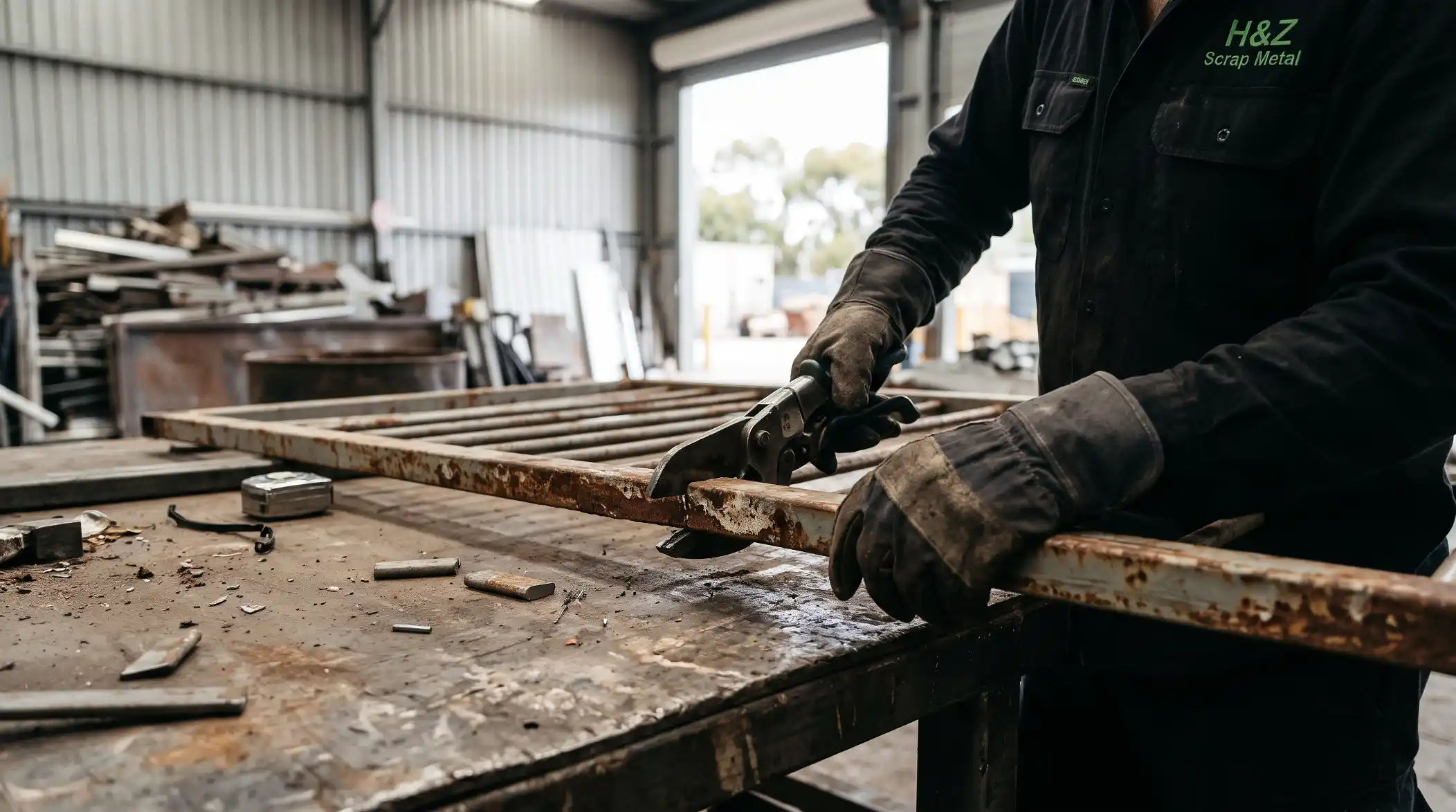
Long or awkward items can then be cut down, depending on the equipment available at the yard. Shears and cutting tools slice through steel that would take a person hours to cut by hand. My frame was too long for a shipping container, so I was cut into shorter pieces. Thinner sheet metal, wire, and similar material is frequently pressed in a baler into compact blocks that can be transported much more easily and cheaply.
This step matters because steel mills require consistent, well-prepared steel. The better a yard sorts and prepares its scrap, the higher the quality of the steel that comes out the other end. Each cut, each sort, and each bale is a step towards a new product.
Chapter Five: The Road to the Mill
Once a sufficient quantity of the same grade is collected, it is loaded onto trucks, trains, or ships to be sold to steel mills and metal processors. Depending on demand and price, some of this material remains in Australia, and some is exported to mills overseas. This is the journey most people never think about. The pile that you drop at your local yard doesn’t just stay there. It becomes part of a much bigger supply chain that supports the many industries that use steel every day.
I went for a ride on the back of a truck, a few tonnes of us rattling past paddocks and freeways, not knowing where I was going, only that it was onward. For a rusty old gate frame, it was quite an adventure.
Chapter Six: Into the Furnace
At the mill, I, along with the other scrap steel, was loaded into a very large electric arc furnace. Intense electric currents pass between large graphite electrodes and the metal, creating enormous heat. The temperature climbs to more than 1,500 degrees Celsius, hot enough to turn solid steel into a glowing liquid. In no time, the paint was gone from my surface. The rust, the dents, and the shape of a gate that once swung on two hinges were gone too. I became part of a pool of bright, molten metal with all the other scrap in the furnace.
This is the time when the story changes from old to new. The molten steel is tested, other elements are added as necessary, and impurities are drawn off as a by-product called slag. This means the steel produced has just the characteristics the mill requires, whether that is strength, flexibility, or wear resistance. A worn-out backyard gate had, quite literally, been reborn.
Chapter Seven: Becoming a Beam
The liquid steel is then poured into a continuous casting machine, where it cools and solidifies into long shapes. These are then reheated and fed into a rolling mill, where large rollers squeeze and stretch them into their final shape. That could be concrete reinforcing bar, steel posts, railway track, or structural beams.
I came out as a beam. Straight, strong, and shiny, fresh from the heat and cut to length, I was loaded onto a truck once again and taken to a building supplier. Today I could be holding up a warehouse, a school hall, or the structure of a shopping center. Not a single person who walks into that building will know I used to keep a dog in a backyard. It does not matter. I’m working a new job, and I’m doing it well.
Chapter Eight: Why Steel Can Do This Again and Again
Steel is one of the most recyclable materials in the world. It can be melted down and reused again and again without losing strength, so a gate frame can become a beam and, one day, something else. Recycled steel requires significantly less energy to make than steel from raw iron ore, and it reduces the amount of material that needs to be mined. It also keeps waste out of landfill, where it would sit for decades doing nothing.
Every household and business that sends metal to a recycling yard instead of a rubbish bin helps keep that cycle going. One gate isn’t much, but thousands of sheds, garages, building sites, and backyards add up to a lot of steel kept in circulation.
Your Turn: Start Your Own Piece’s Journey
You don’t need to be an expert to get your scrap going. First, walk around your property and inspect it for old steel: gates, fences, brackets, tools, trailer parts, bed frames, and old tanks. Use a magnet to separate steel from other metals. Remove plastic, rubber, and wood wherever possible, and keep different metals in separate piles. Secure the load before driving, and if in doubt, check before you go.
Once your pile is ready, contact H&Z Scrap Metal. Whether you have one old gate or a shed-load of steel, your scrap has a future, and the first step is getting it to the right place. The rusty old junk in your backyard may be used to construct a structure you pass next year.