You load the ute on Saturday, head to the yard, and get a price that seems lower than what you heard a few weeks earlier. Or it’s higher, and you ask yourself why you didn’t come sooner. Either way, the same question comes up: why does the number keep changing? It’s one of the most-asked questions at H&Z Scrap Metal. Scrap prices aren’t determined by one person on a single day. They’re the end of a long chain that begins in markets around the world and culminates at the weighbridge.
This guide walks you through that chain and explains what to do at each stage, depending on where you fit. If it’s your first time selling scrap, see the beginner section. If you drop off a load every month or two, read the regular seller section. If you move metal by the tonne, go to the bulk seller section. All three are worth reading, as each builds on the previous one.
What Actually Moves the Price
Scrap metal is a commodity, and like all raw-material commodities, it’s subject to the forces that drive its price. Prices of metals such as copper and aluminium change throughout the day based on demand from manufacturers and the availability of supply. When factories overseas are busy, demand for metal rises and yards can offer more. During economic slowdowns, or when construction activity decreases, demand slackens and prices typically follow.
The exchange rate is also a factor. A large share of the metal recovered in Australia is processed and sold to overseas buyers, often in US dollars rather than Australian dollars. When the Australian dollar strengthens, the same overseas price converts into fewer local dollars, which can lead to a lower offered price. If the Australian dollar weakens, the opposite can occur. You don’t need to watch currency charts, but it helps to understand why a price might move while the metals market appears calm.
Then there’s the cost between the world market and your trailer. A yard must sort, shear, bale, store and transport material, and it needs a margin to keep the doors open. What a yard can afford to pay you depends on factors including freight, fuel and shipping availability. That is why two yards can offer different prices on the same day, and why the weighbridge price is always lower than any headline price you’ll find in a news article.
Lastly, your own material changes the number. Clean, sorted and easily identified metal is cheaper to process, so it gets a higher rate than a mixed or dirty load. Volume is also important, as it can sometimes help you get a better rate. Combine all that and you have the world market, the dollar, the yard’s costs and the quality of what you bring. Some of these you can’t control. Some you can, and that’s what the three levels below are all about.
Level 1: The Beginner Seller, Learn the Basics Before You Chase the Best Price
If you’re selling for the first time, don’t worry about timing the market. The aim is to get a fair price, avoid unnecessary trips and understand the process. First, figure out what you have. Most homes have a mix of steel, aluminium, copper, brass and stainless steel, and each metal earns a different price. The simplest method is to try attaching a magnet: it will stick to steel and iron, but not to aluminium, copper, brass or most stainless steel.
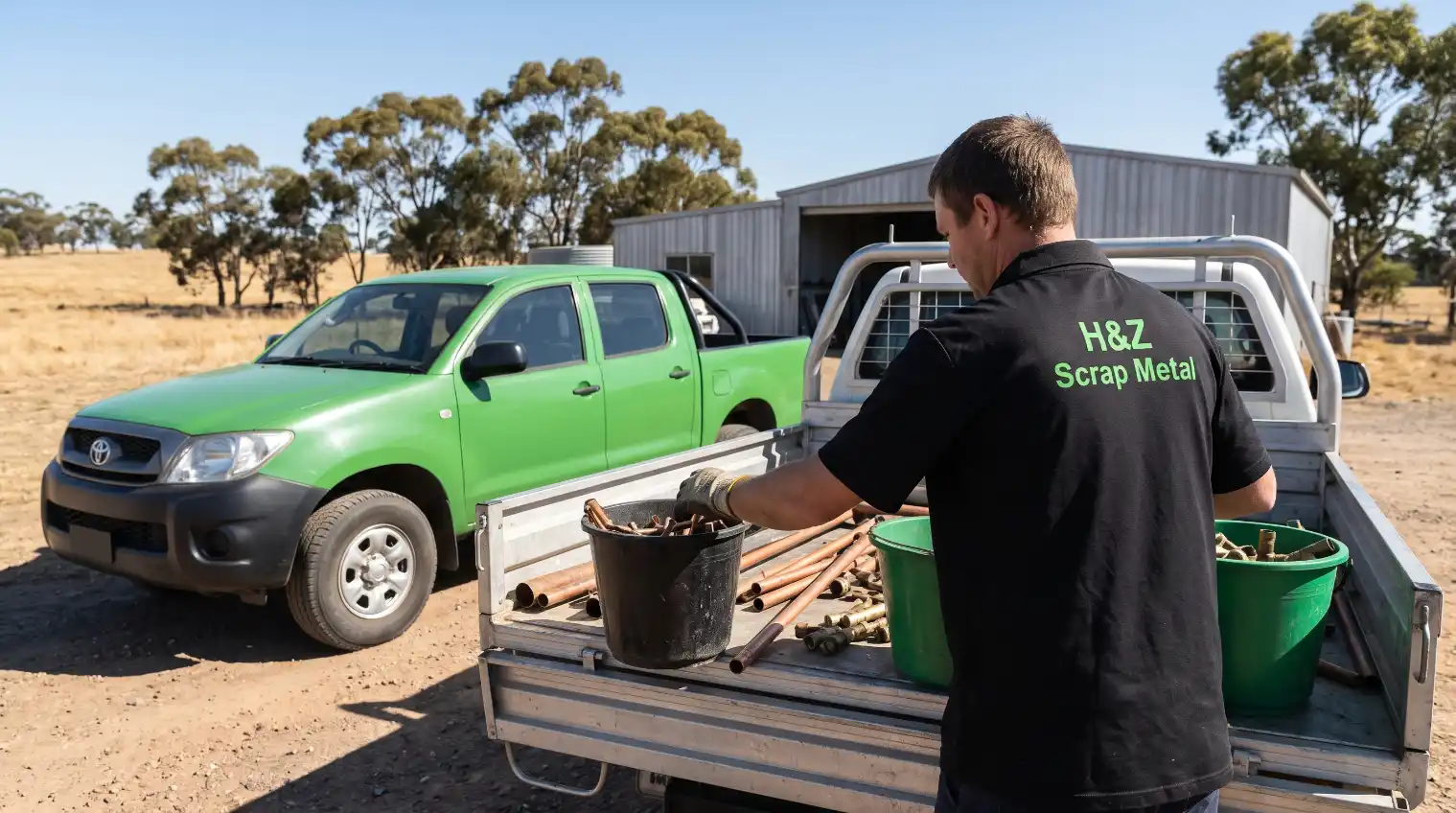
Then, separate your metals. Throw copper pipe in with steel brackets and the yard may apply the lower rate to the entire load. A couple of buckets or old crates will do. Remove obvious waste like plastic, rubber, wood and soil, as it adds no value, and most yards will either deduct it or refuse it.
Contact H&Z Scrap Metal before you drive anywhere to find out the price per kilogram for the metals you have. All prices are given by weight and may vary, so treat a quote as a guide for that day, not a promise for next month. Ask about hours of operation, required ID and payment options. Many parts of Australia have rules for scrap metal sales, and you may be asked to present ID and be paid by bank transfer instead of cash, so it helps to know this beforehand.
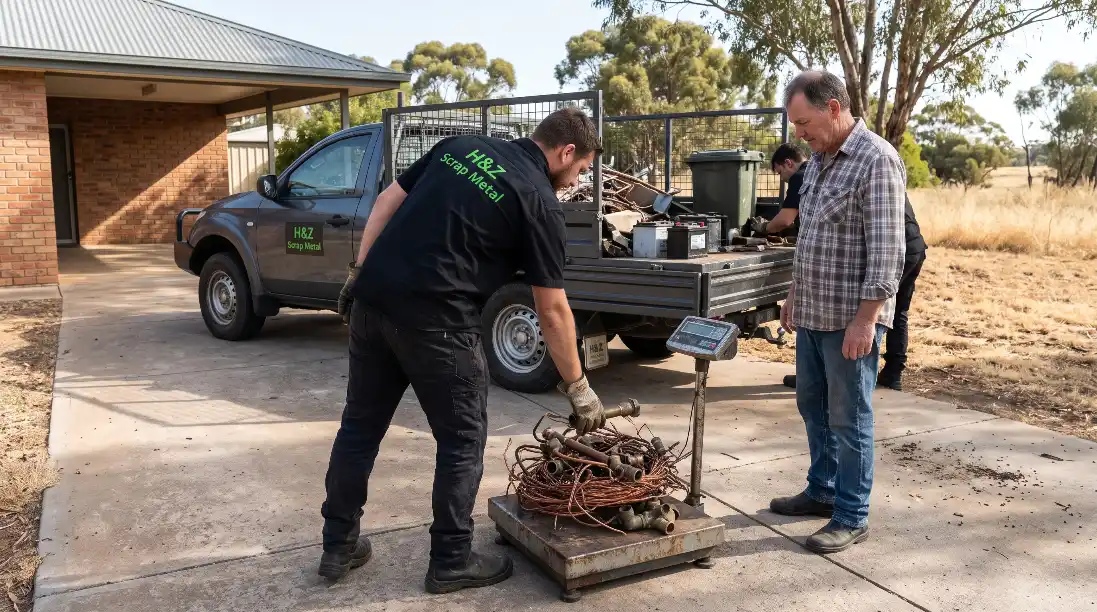
Your load is weighed, assessed and priced when you arrive. Watch the weighing and ask if you don’t understand something. Everyone at the yard has been a first-timer. If you’re not sure whether a bulky item, like an old washing machine or a car part, has any value, ask. If the load is too heavy to move easily, ask about pickup instead of straining your back or your vehicle.
For the beginner, the rule of thumb is not to wait for a better metal price. A few cents per kilogram on a small load isn’t worth the clutter and the cost of storing sharp, heavy items in a garage. Treat your first visit as practice, sort what you can and sell when you’re ready.
Level 2: The Regular Seller, Start Watching the Pattern
If you sell monthly or every couple of months, perhaps from side jobs, renovations or clearing out properties, you’ve probably noticed prices moving up and down. The purpose at this level is not just getting it done, but getting it done smartly. The most helpful practice is basic record keeping. Each time, record the date, the kind of metal, the weight and the price per kilogram you were paid. After four or five visits, you’ll be able to see the typical range for your metals and recognise when a quote is unusually high or low.
That little log can make a real difference to when you sell. When copper is paying at the upper end of your usual range, it’s a good time to bring in a load. If it’s at the bottom and you have plenty of room and no hurry, you can wait a week or two. Remember, it’s about a range, not a forecast. Even the yards can’t predict where prices will go next. Your log won’t predict the future, but it will keep you from selling at a price you’ll regret.
Regular sellers can gain the most from sorting. Go beyond steel versus non-steel. Separate clean copper wire from insulated cable, brass taps and fittings from copper pipe, and aluminium offcuts and extrusions from cast aluminium. The rate varies by grade, and a yard will pay the higher rate only if it can see the material is clean and identifiable. Stripping insulation or removing steel attachments can be worth it when the time taken is small compared with the difference in price. If it takes an hour to save a few dollars, leave it.
Get to know your yard. Sensible questions and well-sorted loads make communication easier for regular customers and keep expectations clear. Ask H&Z Scrap Metal how often prices are updated and whether different grades have a minimum quantity, so you can plan your loads. If you’re gathering a lot of bulky items that are difficult to transport, ask about pickup.
Finally, consider batching. You may be able to collect a few weeks of sorted material and take one fuller load rather than a small load each week. The cost of fuel and time per kilogram falls, and a larger load gives you a better picture of the weights involved. Keep storage clean and dry, contain sharp edges and keep heavy items stable.
Level 3: The Bulk Seller, Treat Scrap Like a Revenue Stream
Tradies, demolition crews, factory managers, landlords and property managers who create metal by the tonne play a different game. At this level, even a small per-kilogram price movement is real money, and timing and relationships matter more. Start by treating scrap not as an afterthought but as an income stream with its own process, storage and records.
Work at a steady pace. Decide how often you collect, how you separate at the source and where metal is stored before it moves. Dedicated on-site bins for specific metals reduce the time spent sorting later and avoid contamination, one of the largest hidden costs for bulk sellers. A load of clean aluminium tipped into a mixed bin sells at a mixed price.
Then, agree on terms. Discuss pricing for large quantities or frequent loads with H&Z Scrap Metal, along with how often rates are reviewed, how loads are weighed and assessed, and what paperwork you’ll receive. Your weighbridge dockets and invoices matter for bookkeeping and for any tax or compliance requirements your business has, so keep them organised and speak with your accountant about how to treat the income.
Bulk sellers have more flexibility with timing, but they should use caution. If you have safe, dry storage and don’t need the space, you can sometimes move a load when prices look strong against your recent history, rather than on the day the bin happens to fill. However, holding metal doesn’t come cheap. Storage space, insurance, theft, site safety and the risk of falling prices all count against it. Treat any decision to hold as a bet with a cost. Instead, set your own rules ahead of time, for example selling when bins are full or at regular intervals, and only break them for a good reason. Rules keep you from both panic and greed.
Plan the logistics of the sale as well. The ideal is one scheduled, full, well-organised load rather than three half loads arranged at short notice. Consider how a truck will reach the metal, how heavy items will be loaded and who on site approves the weights. If you need the metal collected to suit your project, ask H&Z Scrap Metal whether they can arrange a time that won’t tie up your site, as a late pickup can cost you more in lost site time than a small price movement ever would.
Last, check the numbers quarterly. Compare the amount earned per tonne, the share of your material that was clean versus mixed, and the cost of handling. If your sorting quality has slipped, fix that before chasing a better rate.
A Word on Timing for Everyone
The same basic truths apply on all three levels. Markets fluctuate, and you can’t control them. Quality, sorting and planning are in your control. The best time to sell is usually when you have a clean, sorted load, a quote you feel good about and no good reason to keep storing it. Waiting for a price rise can pay off, but it can also cost you, and metal sitting in a shed isn’t earning anything. The smartest thing any seller can do is ask for the current price before every trip and compare it with what they’ve been paid before.
Since you’re paid by the kilogram, it also helps to know roughly how much your scrap metal pile weighs before you ask for a quote.
Looking for a Scrap Yard Near You?
Whether you clear out your garage once or a few times a year, or you’re moving tonnes from a job site, the steps are the same: know what you have, sort it well and compare prices before you move. Call H&Z Scrap Metal for the latest scrap metal rates, ask about pickup, and turn that pile of metal into a good return.