Every job site ends the same way. The job is done, the client is pleased, and the back of the ute is stuffed with short lengths of copper pipe, cable ends, bent brackets, old fittings and aluminium trim. For most tradies it’s just rubbish that costs them time and money to remove. That’s not the way we think at H&Z Scrap Metal. Those off-cuts are metal, and metal keeps its value.
This blog is a before-and-after story about one tradie. It’s an illustration, a composite of what many tradies see in everyday work life rather than a real named customer, but the habits it describes are practical and easy to copy. By the end, you’ll know how to create a simple weekly sorting routine that takes minutes and helps you avoid wasting money you’ve already earned.
The Before: Full Ute, Full Skip, Empty Pockets
Imagine a plumber who spends his weeks on bathroom renovations and small commercial fit-outs. Every job leaves something behind: copper pipe off-cuts, brass fittings, a broken tap, steel brackets and a bundle of old pipe removed from a wall. The easiest answer is to put it all in the nearest general waste skip, which is usually on site.
That habit has a hidden cost. If the skip is hired by size or weight, he’s paying to get rid of something a scrap yard would pay him for. Copper pipe is going in the bin next to the plasterboard and tile, and nobody sees it happen because it’s only a few pieces at a time.
Anything that doesn’t go in the skip goes in the shed. There’s a stack of mixed copper and brass in the corner, a pile of steel, a few aluminium off-cuts and a tangle of things he can’t quite identify. The pile grows, the shed gets smaller, and every time he walks past it he thinks about the day he’ll finally get around to it.
Eventually, that day comes. On Saturday morning, he shovels the whole lot into the back of the ute, heads to a yard and hopes for the best. The load is mostly unsorted, so the yard treats most of it as mixed metal. He gets paid something, which feels like a win after months of clutter, but he doesn’t know what he’s missing. He doesn’t know how much of the pile was copper, or whether a few minutes of sorting might have changed the result.
Add it all up and the before picture has three problems. The first is wasted material, because metal is going into paid bins. The second is wasted time, because a long, painful sorting and hauling job lands on one weekend. The third is wasted money, because a mixed load pays less than a sorted one. There’s also a safety cost that is often overlooked. A shed with heaps of cut pipe, sharp brackets and heavy off-cuts invites injury, and loading an unsorted heap by hand is hard on the back.
The Turning Point: One Phone Call
For our plumber, the change isn’t a big decision. It’s a call to H&Z Scrap Metal with a simple question: what’s the current price for clean copper pipe, and what about brass? He’d assumed it wasn’t worth the bother. He doesn’t get a promise, since prices move with the market and a quote is only a guide for that day, but he gets something more useful. He learns that metals are priced differently, that cleaner metal is valued more, and that his off-cuts are worth sorting.
He also finds out what to bring and what to expect. Depending on where you live, you may need to show identification, and payment may be by bank transfer instead of cash. He asks about opening hours, how loads are weighed and whether there’s anything H&Z Scrap Metal won’t accept. Calling first takes five minutes and avoids a wasted trip.
So he makes a small decision. He won’t treat scrap as something to deal with when the pile becomes a big problem. He’ll treat it as a weekly habit. Nothing fancy, just some buckets and a little discipline.
The After: A Weekly System That Takes Ten Minutes
Start With the Right Containers
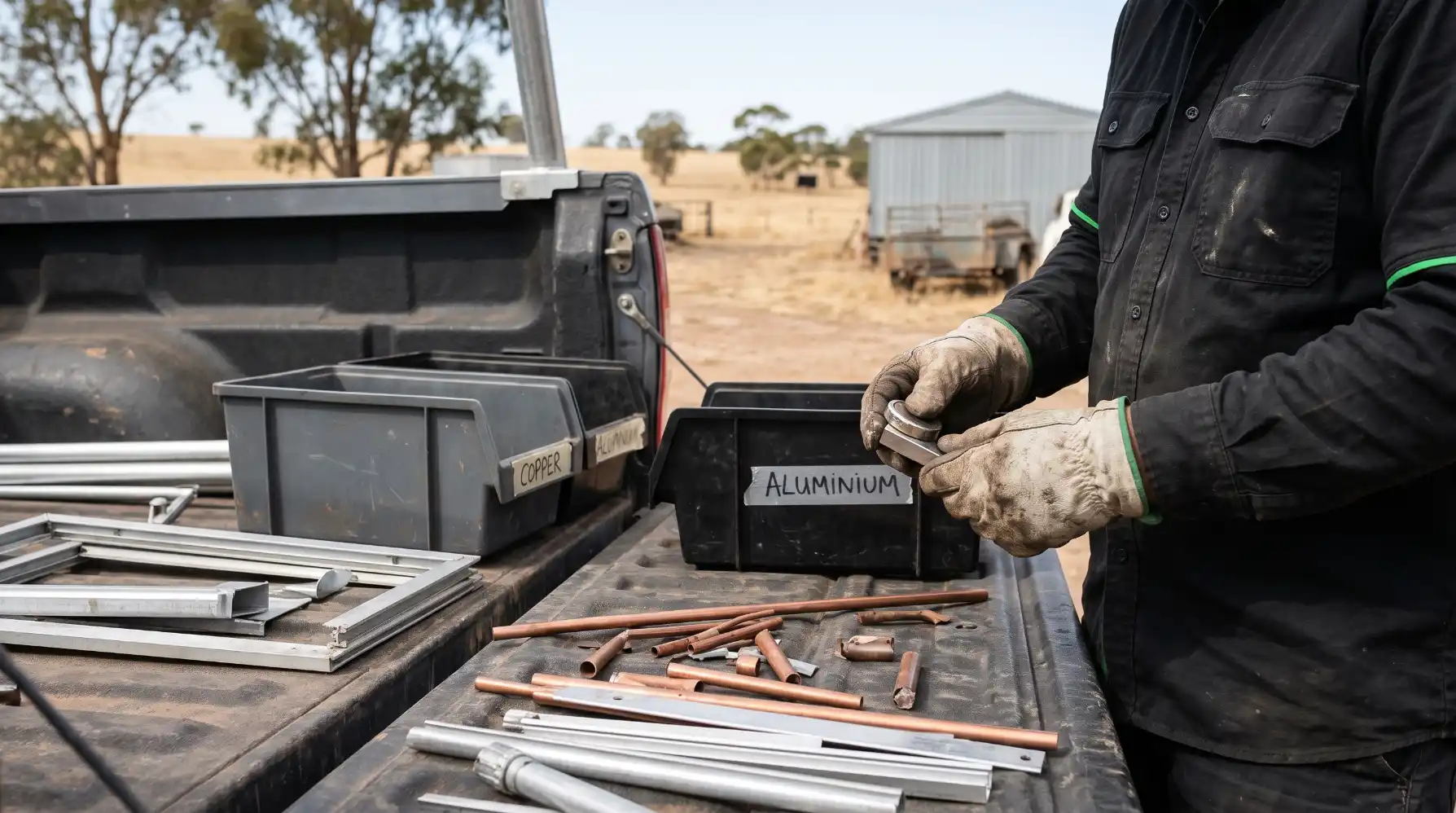
A few sturdy buckets or crates form the basis of the whole system. One for copper, one for brass, one for aluminium, one for steel and one for anything he can’t identify. They live in the ute or the workshop, near where the cutting happens. A small magnet in the glovebox settles most arguments, because it sticks to steel and iron but not to copper, brass or aluminium.
Sort as You Work, Not After
This habit makes all the difference. When copper pipe comes off, it goes straight into the copper bucket. When a brass fitting is replaced, it goes into the brass bucket. It takes a few seconds on site, rather than hours sorting a mixed heap later. The rule is simple: never put metal in the general waste bin if it has a bucket of its own.
Keep It Clean, Keep It Safe
Where it’s quick, he removes non-metal parts such as plastic, rubber or fixings that don’t belong, because they add weight without adding value. Sharp ends are taped or capped, buckets are never filled so full that they’re too heavy to lift, and gloves are worn when handling cut metal. If he’s unsure about an item, such as something old that may contain hazardous materials, he asks before loading it rather than guessing.
Build a Weekly Routine
Once a week, usually on a Friday afternoon, he spends about ten minutes checking the buckets. If they’re full, they go in the ute and he drops them off at H&Z Scrap Metal on the way home. If they’re not, he leaves them until the following week. A few weeks of buckets can also be combined into one fuller load, which saves fuel and time. The point is that metal now moves regularly, in small, manageable amounts, instead of waiting for a crisis.
Keep Simple Records
He keeps his weighbridge dockets and notes the date, the metal, the weight and the rate he was paid. After repeated visits, he can see the range his copper usually sits in and recognise a good week. Records also matter for bookkeeping, so it’s worth speaking with an accountant about how to treat the income.
Ask About Pickup for the Bigger Stuff
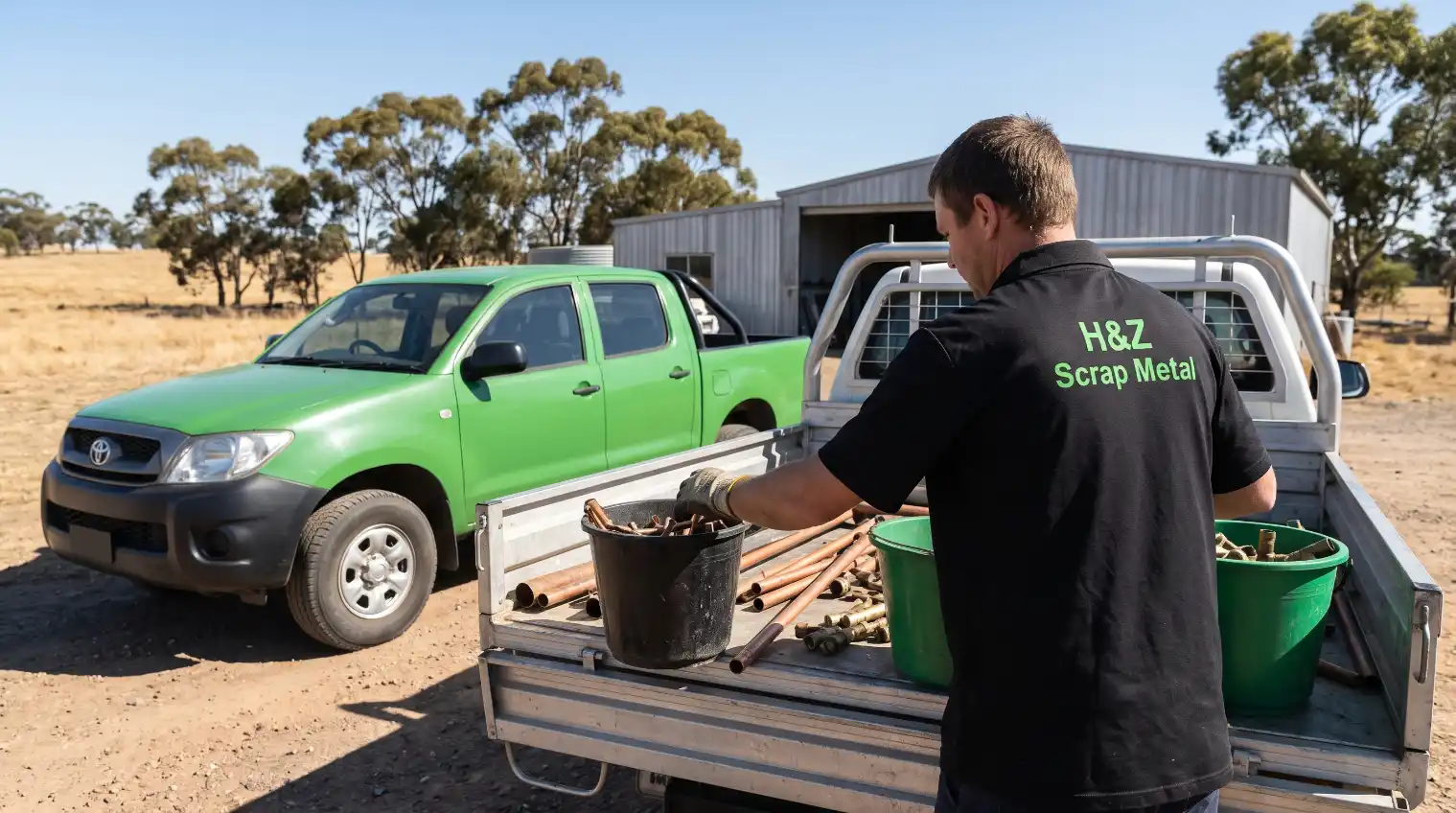
Not everything fits in a bucket. After a bathroom strip-out, he might have old steel baths, a hot water system or a load of heavy pipe, and he asks whether H&Z Scrap Metal can organise a pickup instead of loading the ute himself. It saves his back, his time and his suspension, and it keeps the job site moving.
The After Picture: What Actually Changed
The ute is the same, the jobs are the same and the hours are the same. The difference is how the leftovers are handled. The shed has a floor again. Metal that used to be thrown into paid bins is now collected in buckets. The weekend sorting marathon is gone, replaced with a few minutes at the end of each week. And because the metal is separated at the source, it’s worth more when it arrives.
How much does it add up to? That depends on the type of metal, the quantity, how clean it is and the price on the day, so there’s no universal amount. What can be said is that getting a regular, small payment for something that used to cost him money is a better position to be in. It also helps him understand his own business, because he now knows how much metal his jobs produce.
The habit spreads too. An apprentice is given the job of keeping the buckets tidy, a mate on another site sees the system and copies it, and before long the whole crew is sorting as they go. It becomes a normal part of how the team works, rather than an extra chore.
Same Idea, Different Trade
The plumber’s story is one example, but the idea applies across the trades. Electricians produce cable off-cuts, and it pays to keep clean copper wire separate from insulated cable, since they’re treated differently. Builders and carpenters collect steel brackets, off-cuts, old fixings and aluminium window frames. Air conditioning and refrigeration technicians deal with copper tube, aluminium and steel from old units. Fencers, landscapers and roofers regularly handle steel, aluminium and sheet metal. In every trade the principle is the same: separate at the source, keep it clean and move it regularly.
Mistakes That Quietly Eat Into Your Scrap Income
Some habits undo the benefit of a good system. The most common is using a single bin for everything, which removes the point of sorting. Another is leaving metal on the workshop floor, where it can get lost, damaged or contaminated. Holding material in the shed for months, waiting for prices to rise, is a gamble, and metal sitting in a shed isn’t earning anything. Turning up without checking the price or the identification requirements wastes a trip. And ignoring safety, such as overfilled buckets and sharp edges, can cost far more than the scrap is worth.
Turn Your Off-Cuts Into Weekly Cash
You don’t need a large operation to get started. A few buckets, a magnet, a little discipline and a phone call are all you need. Call H&Z Scrap Metal to find out the current rates, what to bring and whether pickup is available for your site, and start turning the leftovers from every job into income.