Walking into a scrap yard for the first time can feel like landing in a country where you don’t speak the language. Everyone is busy, and they’re talking about ferrous and non-ferrous, heavy iron and light iron, bright and number two copper, gross, tare and net. You nod along, unload your trailer and hope everything works out. Then the docket comes back with a handful of terms you don’t quite recognise, and you’re left wondering whether the figure at the bottom is right.
This guide is here to fix that. At H&Z Scrap Metal, we believe a seller who understands the language gets better results, because they load smarter, sort better and ask the right questions. Think of what follows as a plain-English decoder. We’ll go through the jargon you’re most likely to hear, explain what it actually means and show how it affects what you’re paid. One note first: different yards define things slightly differently, especially grades, so use this as a general guide and always ask how a particular yard defines its terms.
Ferrous: The Metals That Contain Iron
Start with the biggest word in the industry. Ferrous simply means any metal that contains iron. Steel is the prime example, and cast iron is another. A typical scrap load is mostly ferrous: old appliance shells, steel framing, fencing, car parts, tools and machinery.
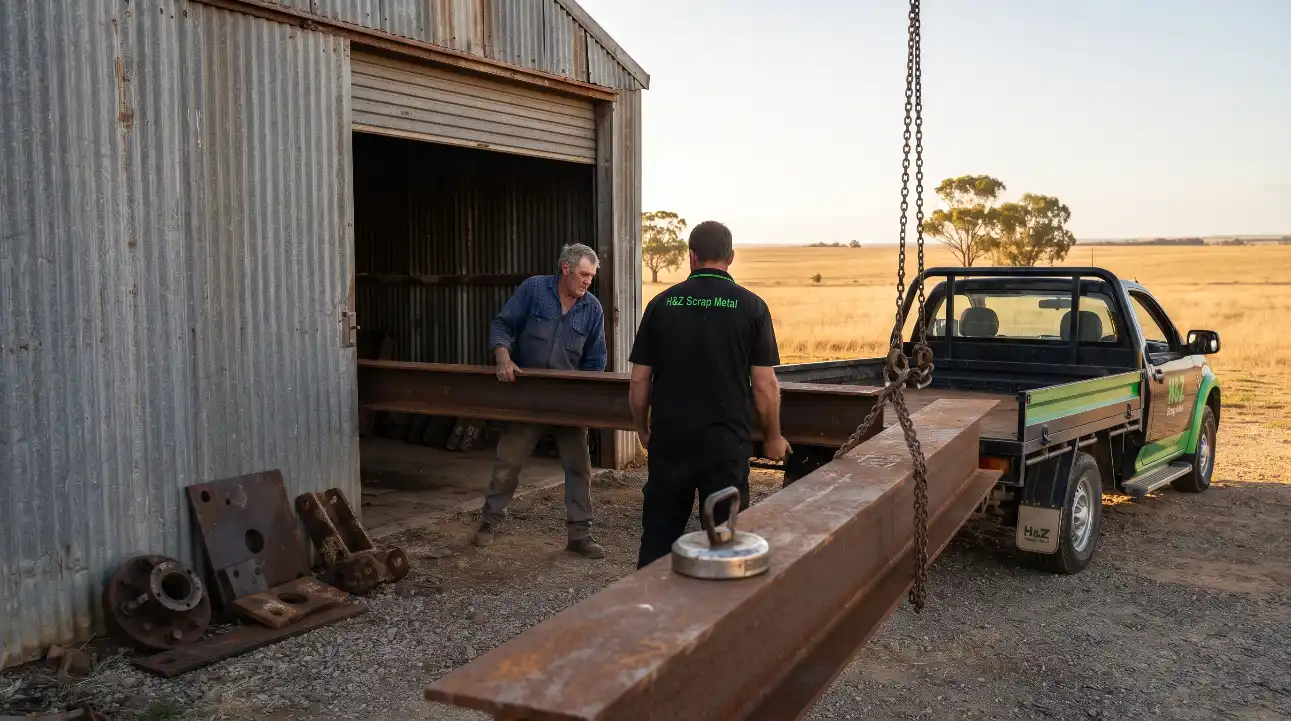
The easiest way to spot ferrous metal is with a magnet. If it sticks, you very likely have ferrous metal. It’s the most useful tip in scrap sorting, because it splits your pile in two in seconds.
Ferrous metal is generally cheaper per kilogram than other metals, but that doesn’t make it less important. It’s plentiful and heavy, so a big load can add up. It’s also one of the most recycled materials in the world and can be melted down and made into new steel again and again. It may not be the most exciting part of the trade, but it’s the backbone of it.
Non-Ferrous: Everything Else, and Often the Valuable Stuff
Non-ferrous metals don’t contain any significant amount of iron. That group includes copper, brass, aluminium, lead, zinc and a few others. Most of them won’t stick to a magnet.
Non-ferrous metals get so much attention because they’re typically worth much more per kilogram. A kilo of clean copper is worth many times more than a kilo of steel. That’s why experienced sellers keep their non-ferrous metals apart from their steel. If a few copper pipes are buried in a trailer of old fencing, they’re easy to miss, and you lose the value of the better metal.
There’s one small trap. Because non-ferrous metals aren’t magnetic, it’s tempting to think anything that fails the magnet test must be valuable. That isn’t always true. Some stainless steels aren’t magnetic either, yet they’re still steel alloys and are graded and priced in their own right. Which leads to the next term.
Stainless Steel: The Metal That Fools the Magnet
Stainless steel is steel alloyed with other elements, typically chromium and often nickel, to resist rust. You’ll find it in kitchen sinks, benchtops, cutlery, commercial kitchen equipment and many appliances.
This is where the magnet test gets tricky. Many common stainless steels are non-magnetic or only weakly magnetic, so a magnet alone can’t always tell you whether something is stainless. Yards use other checks to confirm it.
Stainless steel is usually classified separately from ordinary steel. If you have a sink or a stainless benchtop, keep it apart from your regular steel. It’s a small step, but it helps make sure the metal is identified and graded correctly.
Heavy Iron: Thick, Solid and Easy to Process
Now to the term in the title. Heavy iron is thick, solid ferrous scrap. Think structural steel beams, thick plate, large machinery parts, heavy brackets and chunky cast iron. The exact thickness varies from yard to yard, so there’s no set number, but the idea is consistent: it’s dense, substantial and fairly pure in what it’s made of.
Why does it matter? Thick, solid material is easier to process than thin, awkward material. It packs a lot of metal into a small space and is less likely to be contaminated with other materials. For these reasons, it’s typically priced higher than lighter ferrous scrap.
If your workshop holds thick steel offcuts or old machinery, there’s a good chance it will be treated as heavy iron. When you call, ask how the yard defines it, because it can affect the rate you’re quoted.
Light Iron: Thin, Bulky and Often Mixed
The opposite of heavy iron is light iron. This is thin, lightweight ferrous scrap such as old appliance shells, sheet metal, steel drums, roofing sheets and filing cabinets. It takes up a lot of room for the amount of metal in it, and it often has other materials attached, such as plastic, glass, foam or wiring.
Light iron is generally priced lower than heavy iron, because it’s more work to handle and contains less metal by volume. That doesn’t make it worthless. A trailer full of light iron still has value, and bringing it in keeps it out of landfill. It simply helps to understand why a load of old washing machine shells and a load of thick steel beams of the same weight aren’t handled the same way.
If you can, remove as much non-metal as is safe before bringing light iron in. Taking off plastic panels, rubber seals and loose fittings makes the load cleaner and easier to grade.
Cast Iron: Heavy, Brittle and Magnetic
Cast iron is made by pouring molten iron into a mould. You’ll find it in old bathtubs, engine blocks, stove parts, pipes and manhole covers. It’s very heavy and quite brittle, so it can crack or shatter under impact.
Because it contains iron, it sticks to a magnet and is generally classed as ferrous. Many yards treat it as its own category or fold it into heavy iron, depending on the item. If you have something big and heavy that looks like cast iron, mention it when you arrive so the team can handle it properly.
Copper: The Grades You’ll Hear About
Copper is one of the most valuable common scrap metals, and one of the most finely graded. You’ll often hear bright copper, number one copper and number two copper. These are shorthand for different levels of cleanliness and quality, although the exact definitions can vary between yards.
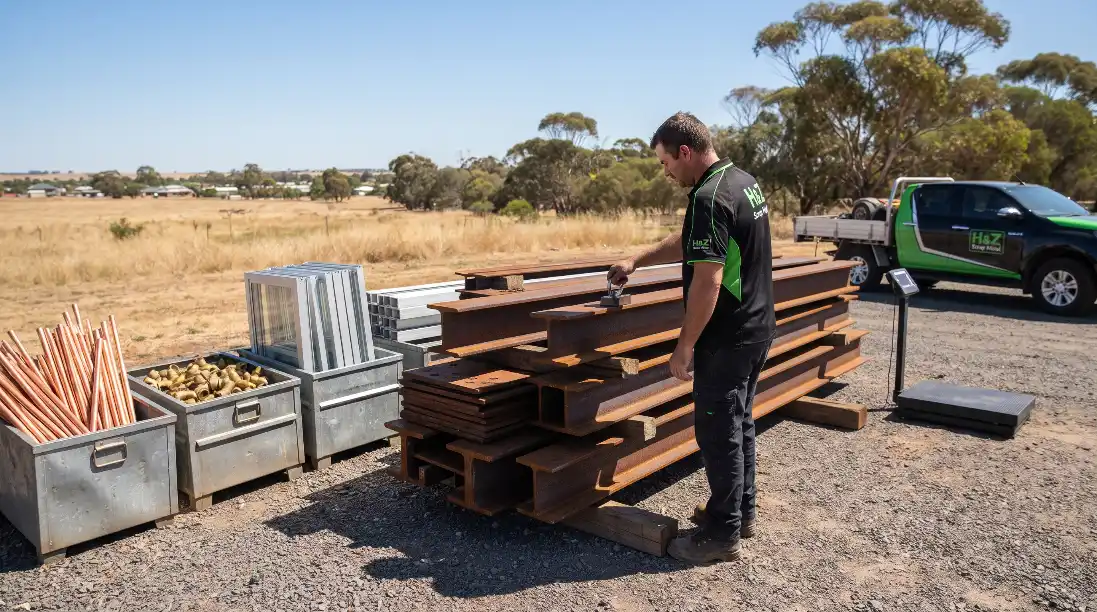
Bright copper is usually clean, bare, uncoated copper wire with no insulation. Number one copper typically means clean copper pipe or tube with no paint, solder or fittings. Number two copper generally covers copper that is less clean, such as pipe with solder joints, paint or small fittings attached.
In short, the cleaner the copper, the better the grade, and the better the grade, the higher the price. Insulated copper wire, the kind with a plastic sheath, is graded differently again, because the plastic has to be removed before the copper can be recycled. If you have the time and it’s safe, removing non-copper material can lift your grade. If in doubt, ask.
Brass: Copper’s Golden Cousin
Brass is an alloy of copper and zinc. You’ll find it in taps, valves, fittings, door handles, plumbing parts and decorative items. It’s usually yellow or gold in colour and non-magnetic.
Brass is graded as a separate metal from copper. It’s typically priced below clean copper but above most ferrous scrap. People sometimes add brass to their copper, assuming it’s close enough, but this can lower the value of the load. Keep them in separate containers if you can.
Aluminium: Light, Silvery and Plentiful
Aluminium is light, silvery and non-magnetic. It turns up in drink cans, window frames, cast engine parts, boat fittings, ladders, bike frames and cooking pots. In the scrap world, it’s often described by its form: extrusion, cast or cans.
Extrusion generally means clean, shaped aluminium such as window and door frames. Cast aluminium is thicker and heavier, poured into moulds, as in engine parts and some pots. Cans are simply cans. Each form is usually graded and priced separately, so it’s best to keep them apart.
A good guideline is to remove steel from aluminium where you can. A window frame with steel screws and a rubber seal is easier to grade if some of that is taken off. A tonne of aluminium contaminated with steel is worth less than a tonne of clean aluminium, because the steel has to be removed before recycling.
Lead, Zinc and the Other Metals You Might Hear About
Beyond the headline names, you may come across a few more. Lead is a very heavy, soft, dull grey metal found in old roofing flashing, some pipes and certain batteries. Zinc is found in galvanised steel coatings and in die-cast items such as old taps and small fittings. Both have their own grades and handling requirements.
Lead in particular needs careful handling, and old lead-acid batteries should never be treated like ordinary scrap. If you’re unsure what you have or how to handle it, call H&Z Scrap Metal before you load.
Gross, Tare and Net: The Weighing Words
Gross weight is the weight of your vehicle or trailer with the load on. Tare weight is the weight of the same vehicle once the scrap is off. Net weight is the difference, the weight of the metal you’re selling.
In plain English: gross minus tare equals net. That’s the figure that really counts, because it’s the weight you’re paid on. It’s a good habit to check that the numbers on your docket make sense and to ask if anything looks off. A good yard will always be happy to explain.
Not sure what your load will weigh before you head in? Learn how to estimate scrap metal weight with a bucket and a bathroom scale.
Clean, Dirty, Mixed and Prepared: The Condition Words
Clean means free from attachments, coatings and contamination. Dirty means it has other materials attached or is covered in grime, paint or plastic. Mixed means different metals are thrown together. Prepared means the material has been cut, sorted or stripped to make it easier to process.
These words matter because they tie directly to value. Clean, sorted, prepared material is easier to grade and easier to sell on to the mills that recycle it. Dirty or mixed material takes more effort and is usually worth less. You don’t have to be perfect, and the H&Z Scrap Metal team will always help you work out what you have, but the more you sort and clean before you arrive, the better your result is likely to be.
Putting the Jargon to Work
Now that you know the words, here’s how to use them. Before your next trip, grab a magnet and split your pile into ferrous and non-ferrous. Within the ferrous pile, separate heavy iron from light iron and keep any stainless steel in its own spot. Within the non-ferrous pile, keep copper, brass and aluminium in separate containers, and remove obvious contamination where it’s safe to do so.
When you call or arrive, describe your load using the terms you’ve learned. Saying “mostly light iron, with some clean copper pipe and a few aluminium window frames” tells the team far more than “a load of scrap”. It helps them prepare, and it helps you understand the quote.
And if you hear a word you don’t know, just ask. There’s no shame in it. Everyone who has ever worked in scrap heard these words for the first time once.
Talk to H&Z Scrap Metal
At H&Z Scrap Metal, we’d much rather you understand the jargon than leave confused. If you have questions about what you have, how it’s likely to be graded or what to expect, contact us before you load up. Describe your scrap in plain words, and we’ll help you make sense of it.
Learn the language, sort your pile and walk in with confidence.