They’re in nearly every shed, garage and backyard. Hidden behind the mower or under the tarp on the back fence is a piece of steel pipe, a half roll of copper wire, an old bike frame, a bent aluminium ladder and a few brackets that were obviously going to be useful. Ask the owner why it’s still there and you’ll get the same answer every time. “One day I’ll need it.”
Sometimes that’s true. A pile can be a sensible stash of materials waiting for a project. More often, it’s money and space that aren’t being used. This guide from H&Z Scrap Metal is an honest look at both sides, so you can decide what to keep and what to sell.
Why We All Keep a Pile
Nobody keeps scrap metal because they’re careless. Most people were brought up not to waste anything, and that’s a good instinct. A spare length of pipe really can save the day, and it feels silly to buy a new bracket for a five-minute job when you know there’s one in the shed.
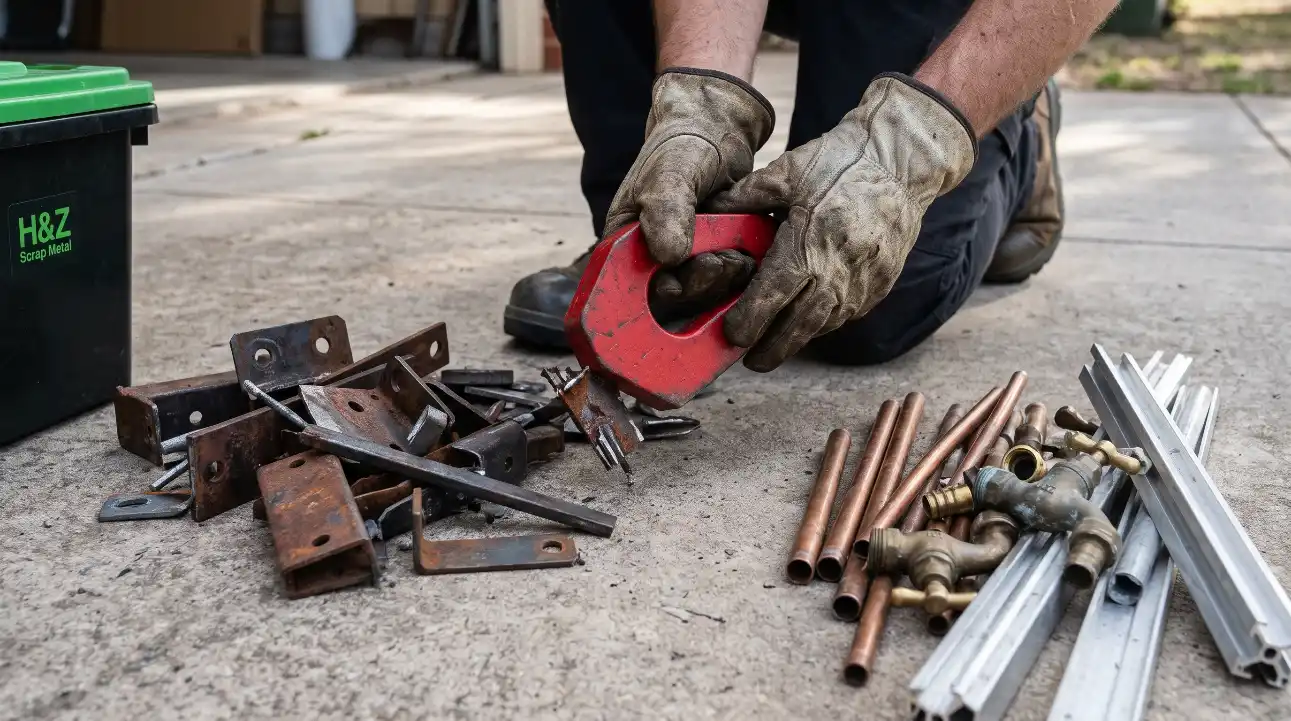
The problem with “one day” is that it has no end date. The stack of offcuts starts small, then keeps growing, because it’s always easier to add to it than to deal with it. Eventually you forget what’s in there, you can’t get to the back of the shed and the good bits are buried under the useless ones. At that point it’s no longer a toolkit, it’s a storage problem. Deciding what to keep and what to sell comes down to being honest about which of the two you actually have.
The Honest Case for Keeping It
There are good reasons to hold on to some metal, and it’s worth being fair to them.
The first is a real project. If you’re building a gate next month, a chicken run this spring or a trailer over winter, the steel you already have could save you a trip to the hardware store and some money. New steel, pipe and aluminium sections cost far more than a yard will pay you for the same material as scrap, so if you genuinely intend to use it, using it beats selling it. The key word is genuinely. A project with a rough date and a basic plan is very different from a vague idea.
The second is repair value. Spare parts for old machinery, fittings for a boat or caravan, and offcuts that match something you own can be hard to replace. If a piece is hard to find and you know it fits something you actually have, it can be worth more to you than its weight in scrap.
The third is sentimental or practical attachment to a particular item. An old tool, a piece from your grandfather’s workshop or a part from a car you loved is a different kind of keeper. That isn’t a financial decision, and it doesn’t have to be.
The last is timing. Scrap metal prices move with the market, so some people hold material back hoping prices will rise. That’s a legitimate choice, but it’s a gamble. Prices can go up or down, and nobody can promise which. If you hold metal for a better price, treat it as a bonus if it happens, not a plan.
The Honest Case for Cashing It In
Now the other side. For most piles, selling is the better call, for purely practical reasons.
The biggest one is space. Every square metre of garage or yard taken up by metal you’ll never use is a square metre you can’t park in, work in or use for storage. If you’ve been squeezing past the pile for two years, that’s the cost of keeping it, even though you never get a bill.
Metal also doesn’t stay in good condition when it’s stored badly. Steel left outside rusts, and heavy rust means less solid metal and a messier pile to handle. Copper and aluminium don’t rust, but they get bent, tangled and mixed with other materials, which makes them harder to sort and grade. Metal sold sooner is usually in far better shape than metal that’s sat under a tarp for ten years.
Then there’s safety. Piles collect clutter, and clutter creates trip hazards, sharp edges and places for water to pool. A heap of metal in a hot Australian summer, stacked next to fuel, paint or other flammable items, is not something you want near your house. Old batteries, gas bottles and anything that has held fuel or oil can also leak or corrode if left sitting. Clearing the pile reduces both the risk and the mess.
Last but not least, there’s the money. A pile that has sat for years can be worth a surprising amount once it’s weighed. Copper, brass, aluminium and stainless steel are worth noticeably more per kilogram than ordinary steel, and you may be sitting on more of them than you realise. The money you could have had is a real cost of keeping it.
Metal by Metal: Keep or Sell?
Different metals suit different decisions, so here’s how it usually works out, type by type.
Steel and iron are the most common items in any pile. They’re worth keeping if you have a real plan, because the steel section, pipe and plate are useful and cost a lot to buy new. But steel is also the lowest value per kilogram of the common scrap metals. If you can’t name the project, it’s usually better to sell it. Heavy, bulky steel like old frames, sheets and rusty drums takes up the most room for the least return, so these are often the first things to go.
Copper is the one people most often regret keeping for no reason. Wire, pipe and offcuts are compact, valuable and easy to sell. A short length of good pipe is handy for plumbing repairs and may be worth keeping, but long coils and tangled wire you’ll never use are better turned into cash. Clean, stripped copper is easier to grade, so it helps to separate it from plastic and insulation.
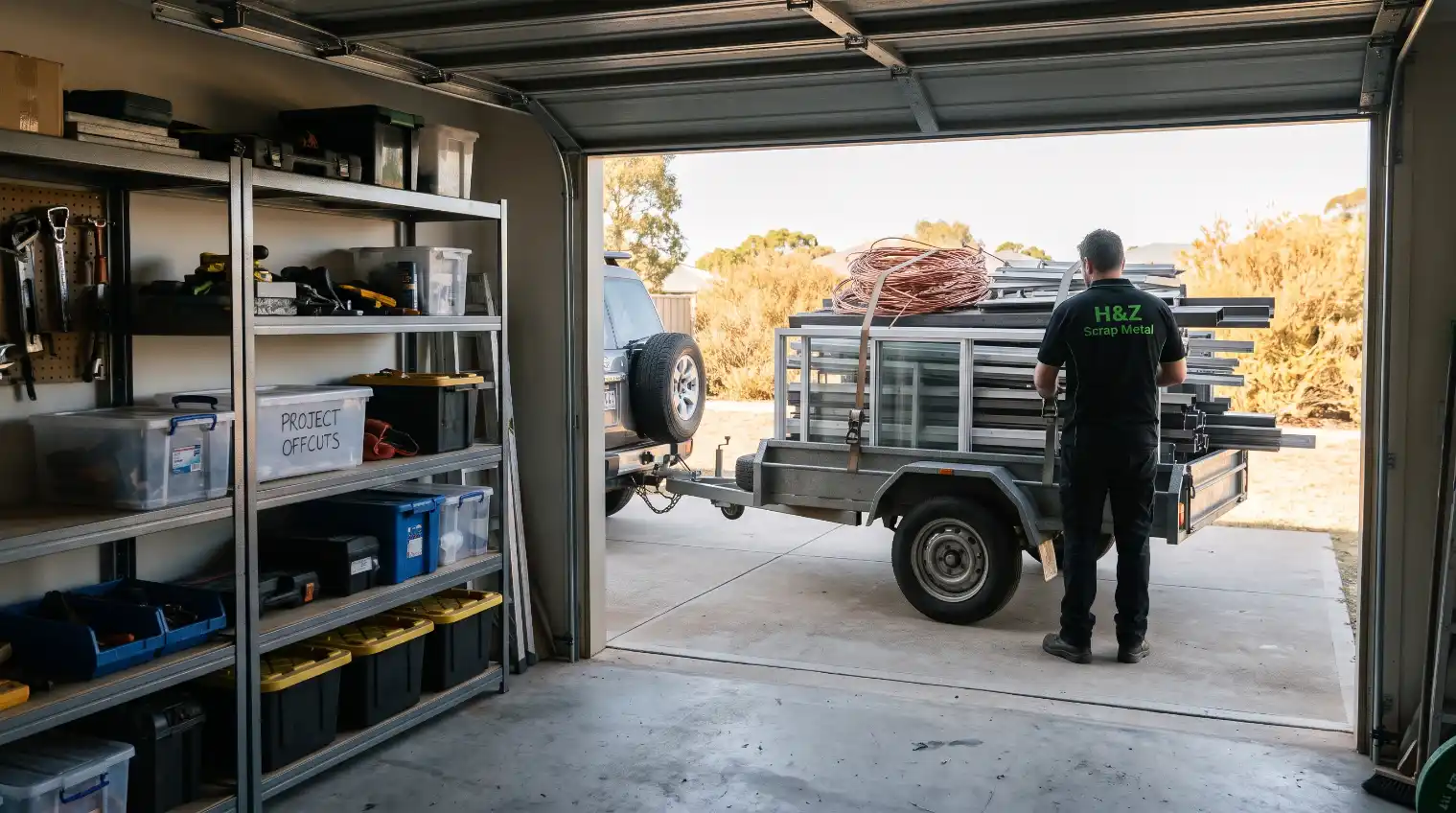
Aluminium comes in many forms: ladders, window frames, gutters, sheeting and extrusions. Clean offcuts can be useful for small jobs. Bent, damaged or painted aluminium with no purpose is better sold. If you bring it in, keep the painted and clean pieces separate, as they can be graded differently.
Brass is found in taps, fittings and old hardware. Because it’s heavier than steel and often worth a lot more, a box of forgotten brass fittings is one of the nicest surprises in a clean-out.
Stainless steel is easy to confuse with ordinary steel, and some types are slightly magnetic, so it can be hard to identify. If you’re in doubt, a yard can tell you what you have. Stainless items like sinks, benchtops and fittings are worth keeping separate from your regular steel.
Items such as old car parts, car batteries and hot water systems are the exception. They take up a lot of space, they’re rarely reused, and some of them, like batteries, fridges and air conditioners, need special handling. Don’t pull them apart yourself. Ask the yard first.
The Three Questions Test
If you’re still not sure, try this simple test. For each item or group of items, ask yourself three questions.
First, can I name the project? Not “something around the house”, but an actual job with a rough timeframe. If you can, it goes in the keep pile. If you can’t, it goes in the sell pile.
Second, would I struggle to replace it? If it’s something common, like a length of standard pipe or a plain bracket, it can be bought again easily and probably isn’t worth a year of storage. If it’s rare, custom or matches something you own, it has a better case for staying.
Third, have I touched it in the last two years? This is the honest one. If it hasn’t been picked up in two years, chances are it won’t be in the next two either. Time is the best evidence of how much you really need something.
If it gets three “no” answers, it goes in the sell pile. If it gets a clear “yes” to the first question, it stays. The ones in between are worth another look, and that’s where most people find they can let go of more than they expected.
The Cost of Keeping Too Long
A pile can seem free, because you’re not paying a storage fee. But there are costs you may not have added up.
There’s the space it takes up. If it blocks your garage or limits your access to the workshop, you’re paying for that every week. There’s the time you lose looking for things that are buried. There’s the effort of moving it every time you need to get at something behind it. And if you ever sell the house, move or renovate, a big pile becomes a big job at the worst possible moment.
There’s also the cost to the people who come after you. Family members who end up with a shed full of mystery metal rarely thank you for it. Clearing the pile now is a favour to your future self and to anyone who has to deal with it later.
How to Do a Pile Audit in One Afternoon
You don’t need a whole weekend to sort a pile. Pick a dry afternoon, wear gloves and sturdy boots, and take it one step at a time.
Start by pulling everything out where you can see it. A pile always looks smaller when it’s tucked away, so get it out in the open. Then use a magnet to split the metal into magnetic and non-magnetic. Steel and iron will stick, while copper, brass, aluminium and most stainless won’t. That single step tells you a great deal about what you’re holding.
Next, go through the groups and build your keep pile using the three questions above. Be strict. The keep pile should fit in one tidy spot, such as one shelf, one bin or one corner. If it doesn’t fit, it’s too big.
Everything else goes in the sell pile. Remove the obvious non-metal bits like plastic, rubber, timber and foam, knock off any loose dirt and keep the different metals separate. Don’t worry about rust or paint on steel, because it generally doesn’t matter, and don’t spend hours scrubbing. If anything has ever held fuel, oil, gas, coolant or chemicals, or if it looks like a battery, don’t bring it in without asking first.
When you’re done, you’ll have a small, tidy keep pile and a sell pile ready to go. You’ll also have a lot more floor space.
Keeping Some, Selling the Rest
It doesn’t have to be all or nothing. For many people the best answer is a compromise: keep a small, organised stash of useful offcuts and spares, and sell the rest. One labelled box or bin of offcuts is plenty for most home projects, and it stops the pile from growing back.
Another helpful habit is a simple rule. Whenever something new goes into the keep area, something old has to come out or be used. That way you don’t end up with another pile.
If you’d rather not haul a big load yourself, get in touch with H&Z Scrap Metal to ask about bringing it in or arranging a pickup. A quick conversation beforehand saves time and makes sure everything is handled safely.
Curious what a sell pile might weigh? Here’s how to weigh scrap metal at home with a bucket and bathroom scales.
Safety Notes Before You Start
Wear gloves, closed shoes and eye protection, as old metal has sharp edges and rusty offcuts can be cut. Lift with your legs and get help with heavy pieces, because steel is heavier than it looks. Don’t cut open or take apart any fridge, freezer, air conditioner or other sealed system, as they contain gas that only trained people should handle. Don’t try to empty fuel, oil or chemicals yourself unless you know how to do it safely, and call first if you’re unsure about gas bottles, batteries or anything that has held a liquid.
So, Keep It or Cash It In?
Keep the metal you have a real plan for, the pieces that are hard to replace and the things that actually matter to you. Cash in the rest: the bulky steel with no purpose, the tangled copper and wire, the bent aluminium and the box of fittings you’ve forgotten about. Your pile probably has a bit of both, and it’s worth an afternoon to work out which is which.
“One day” comes for a few things, but not for most. If you’d like to find out what your pile is worth, bring it in to H&Z Scrap Metal and we’ll help you sort the keepers from the cash.